Documentary Voiceover & Narration Services
Documentary narration is one of those things that either works or it doesn't. When it works, the audience doesn't think about the voice at all. They're just inside the story. When it doesn't, everything starts to feel a little thin, like the pictures need something more to hold them together.
I'm a British voiceover artist from the North East of England, based in Derbyshire, and documentary and narration work is where a lot of my time goes. I've voiced content across film, television, charity campaigns and institutional projects, and the through-line across all of it is the same: the voice has to serve the story, not sit on top of it.
A British Documentary Voice That Brings Stories to Life
There's a quality to a Northern British voice that tends to suit documentary work. It carries weight without sounding remote. It feels grounded and real without losing clarity. That balance matters more than most people give it credit for, because a voice that sounds too polished or too produced can quietly undermine an audience's trust in what they're watching.
My demo reels cover a range of styles. Some of that work sits in what I'd describe as grit, passion and depth territory, the kind of delivery that suits harder-edged subjects or films with a strong point of view. Other pieces are quieter and more personal, intimate and honest, the register that works when a film is asking an audience to genuinely feel something rather than just take in information.
Most documentary projects land somewhere between those two, and shifting between them, finding the right weight for each moment in a script, is a big part of what this kind of work actually requires.
Documentary Narration That Builds Trust
Documentary narration is different from commercial work in one fundamental way: there's nothing to sell. The voice isn't there to persuade anyone of anything. It's there to help the audience follow a story and believe in it.
That means the delivery has to feel authoritative without sounding detached. It has to provide context for complex subjects, whether that's history, science or a social issue, without tipping into lecture mode. And it has to support whatever's happening on screen rather than compete with it. A narrator who draws attention to themselves is usually a sign something has gone wrong.
I've worked on enough documentary-style content to know that the best narration is almost invisible. The viewer doesn't notice the voice. They just feel the story working. That's the aim every time.
Documentary Voiceover Styles and Examples
-
History-led content tends to need a voice that feels considered and authoritative without being stiff. The delivery should give the audience time to absorb what they're hearing, placing them inside the subject rather than rushing them through it. I've worked on content with this kind of reflective, measured quality and it's a register that comes naturally.
-
The challenge with science and nature content is making complex material feel accessible without dumbing it down. The voice needs to stay calm and engaged throughout, clear enough that the audience can follow what's being explained, but warm enough that they actually want to. Getting that balance right is mostly about trusting the script and not overworking the delivery.
-
I record from a fully treated home studio using a Neumann TLM103 mic, Apollo Twin interface and GIK acoustic treatment. The audio that comes back is broadcast-ready and clean, without needing significant work in post.
Turnaround is quick. Documentary post-production schedules compress without warning, and a voiceover artist who can deliver polished, edited audio fast is genuinely useful rather than just convenient. Remote direction works well via Source Connect, Cleanfeed or Zoom if you want to be present for the session. Self-directed work is straightforward too. Send a thorough brief and the audio will reflect it.
Finding the Right Voice for Your Documentary
The voice has to fit the subject. That sounds obvious, but it's worth thinking through properly. A film about a historical event needs something considered and reflective. A science documentary needs clarity and a kind of quiet engagement that doesn't overwhelm what's being explained. A film about real people going through real experiences needs warmth and honesty, something that doesn't feel performed.
It also depends on where the content is going. Broadcast television carries different expectations to a streaming platform, and both are different again from online video or educational content. The pacing, the register, the weight of the delivery all shift depending on the audience and the context.
My approach is always to start from the script and the brief rather than a default read. If you know what the film needs, that conversation is quick. If you're still working it out, I'm happy to talk it through.
Professional Production Quality
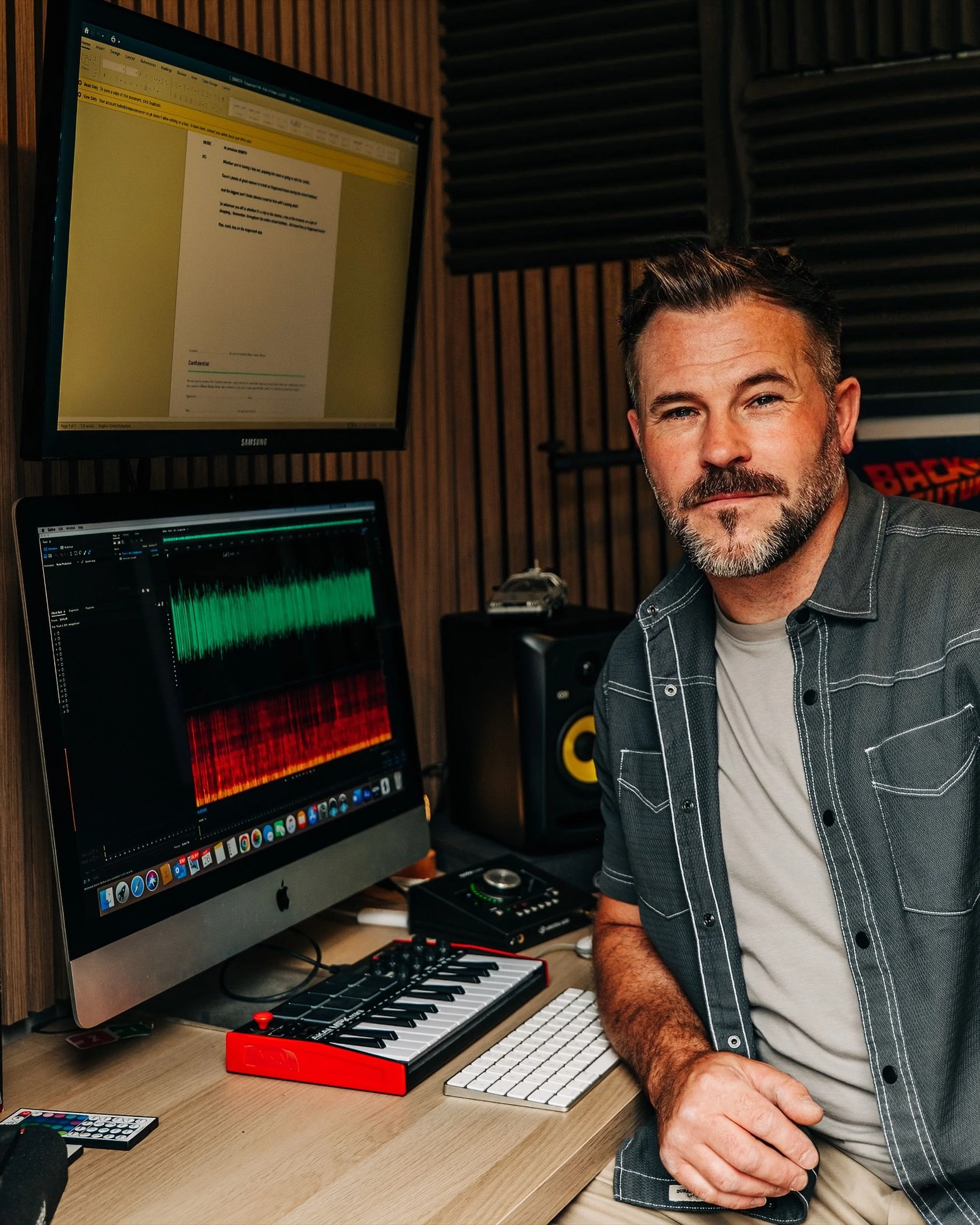
I record from a fully treated home studio using a Neumann TLM103 mic, Apollo Twin interface and GIK acoustic treatment. The audio that comes back is broadcast-ready and clean, without needing significant work in post.
Turnaround is quick. Documentary post-production schedules compress without warning, and a voiceover artist who can deliver polished, edited audio fast is genuinely useful rather than just convenient. Remote direction works well via Source Connect, Cleanfeed or Zoom if you want to be present for the session. Self-directed work is straightforward too. Send a thorough brief and the audio will reflect it.
The process is straightforward. Share your script and brief, and even a rough outline is enough to start. We'll talk through tone, style and audience, and if there's anything specific you want from the delivery, that conversation usually takes ten minutes. Recording can be completed remotely with live direction if you want to be present, or self-directed if you'd rather not sit in on the session. Edited audio comes back in your preferred format, and revisions are available if anything needs adjusting once it sits against picture.
My Process
Why Choose Tim Lee as Your Documentary Narrator
A Northern British voice with genuine range and real appeal across different audiences. Storytelling instinct built across commercial, charity and narrative projects rather than just straight narration work. Proven delivery across documentary-style content for television, film and digital platforms. Fast turnaround, broadcast-quality audio, and a workflow designed to make life easier for production teams. Flexible to project scope, so a full broadcast commission and a short-form digital piece get the same level of care.
Get a Quote for Your Documentary Voiceover Project
If you've got a documentary project that needs a voice, the quickest next step is sending over your script or brief. Even a rough outline is enough to start a conversation about whether the voice is right for what you're making. Pricing is based on the project rather than a fixed rate, so usage, format and duration all factor in. Worth a quick conversation before anything else.