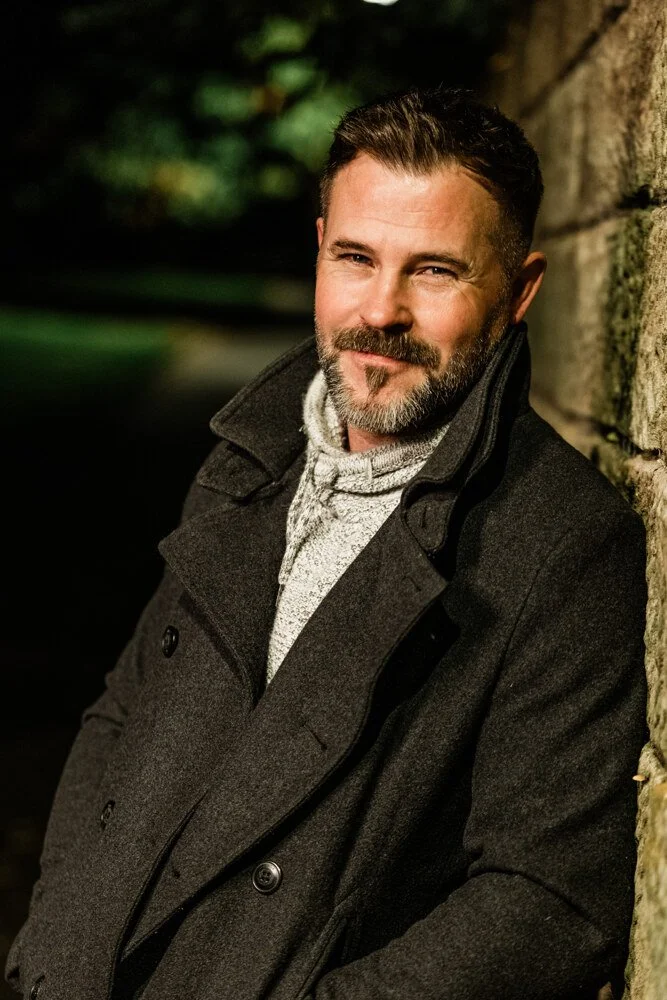
Video Game Voice Over Actor
There’s no hiding place in video game voice acting. A performance gets pulled apart, looped, triggered out of context, and heard dozens of times by the same player. If it’s not right, people notice. I’m Tim Lee, a British voice actor from the North East of England, and delivering character voices that hold up under that kind of scrutiny is what this practice is built around.
Whether you’re casting for a AAA console title, an indie game, or a mobile project with a small roster that still needs to feel distinct, send the script over and I’ll find the right voice for it.
Why Video Game Voice Acting Still Needs a Human Performance
AI-generated voices are everywhere in gaming right now, and game developers are increasingly aware of where they fall short. They can deliver a line. They can’t make a choice about it. The slight shift in tone that tells a player this character is holding something back, the pace that creates tension before the words even land, the warmth that makes an NPC feel like part of the world rather than furniture in it.
That’s what a human performance brings, and it’s still the difference between audio that works and audio that players actually remember.
Game dialogue also has to survive repetition in a way no other voice acting does. If a player triggers the same ambient line thirty times in a session, a delivery that feels even slightly forced becomes unbearable fast. Keeping lines fresh across that kind of repetition is something I build into every performance from the first take, because you can’t fix it in the edit.
A Northern British Voice Actor with Real Range

My voice sits in a warm, grounded register that reads as trustworthy without being bland. The accent is Northern British, originally from County Durham, and it’s more versatile than it might sound on paper. It can be softened toward something neutral with broad international appeal, or pushed further into regional character when the role calls for it. Either way, it carries a quality that tends to suit gaming well: present and real, without drawing attention to itself.
The voice age covers the late twenties through to the fifties, which opens up a wide range of character types. Protagonists, mentors, antagonists, ambient NPCs. The delivery shifts accordingly. Grounded and conversational for a companion character who’s supposed to feel like someone you’d actually trust, heavier and more clipped for a military commander where every line has to carry authority. Memorable character voices come from those specific choices, not from a general approach to performing.
Indie developers often need one voice actor to cover multiple roles within a single project, which requires keeping distinct characters clearly separate across a long recording session. That’s a technical discipline as much as a creative one, and it’s where genuine vocal range earns its keep.
Video Game Voice Over: Characters, Narration and More
-
Character voiceover is the heart of this work: protagonists, supporting cast, antagonists, ambient NPCs. If your game has characters that need to feel like real people rather than placeholders, that’s exactly the brief I want. Indie developers often need one voice actor to cover multiple roles within a single project, keeping distinct characters clearly separate across a long recording session. That takes genuine vocal range and the discipline to use it consistently, and it’s where working with an experienced voice actor pays off.
-
Mobile game voiceover has its own constraints, and they’re tighter than most people expect. Audio plays in short bursts through a phone speaker in a noisy environment, which means every line has to land immediately. The delivery has to be punchy without sounding compressed, and warm without taking up space the sound design needs. If your mobile project needs a voice actor who understands those constraints rather than having to be talked through them, get in touch.
-
A lot of game projects need voices beyond the main character roster: narrator roles for story-driven games, world-building and lore content, and promotional trailers where the voice has to sell the whole project before a player has picked up a controller.
Tutorial and menu narration sits in a different register to character work. It needs to be clear and direct without sounding mechanical, authoritative without slowing the player down.
Get it wrong and the game feels rougher than it is. Get it right and players don’t notice it at all, which is exactly the point.
Broadcast-Quality Studio and Flexible Recording Sessions
The audio you receive should be ready to drop straight into your pipeline without a cleanup job on your end. My home studio is fully treated and set up specifically for professional voice recording: Neumann TLM103 condenser mic, Apollo Twin audio interface, Beyer DT770 Pro headphones and GIK acoustic treatment. Clean, broadcast-ready audio, delivered in your preferred format.
Remote directed sessions run via Source Connect, Cleanfeed or Zoom, whichever suits your team. If you want to be in the virtual booth shaping takes in real time, the connection is stable and the process is straightforward. Self-directed sessions work just as well. A thorough brief is enough to get the performance where it needs to be without anyone sitting in on the session.
Turnaround is fast. Game development schedules shift without warning, and having a voice actor who can turn clean, edited audio around quickly is genuinely useful rather than just convenient.
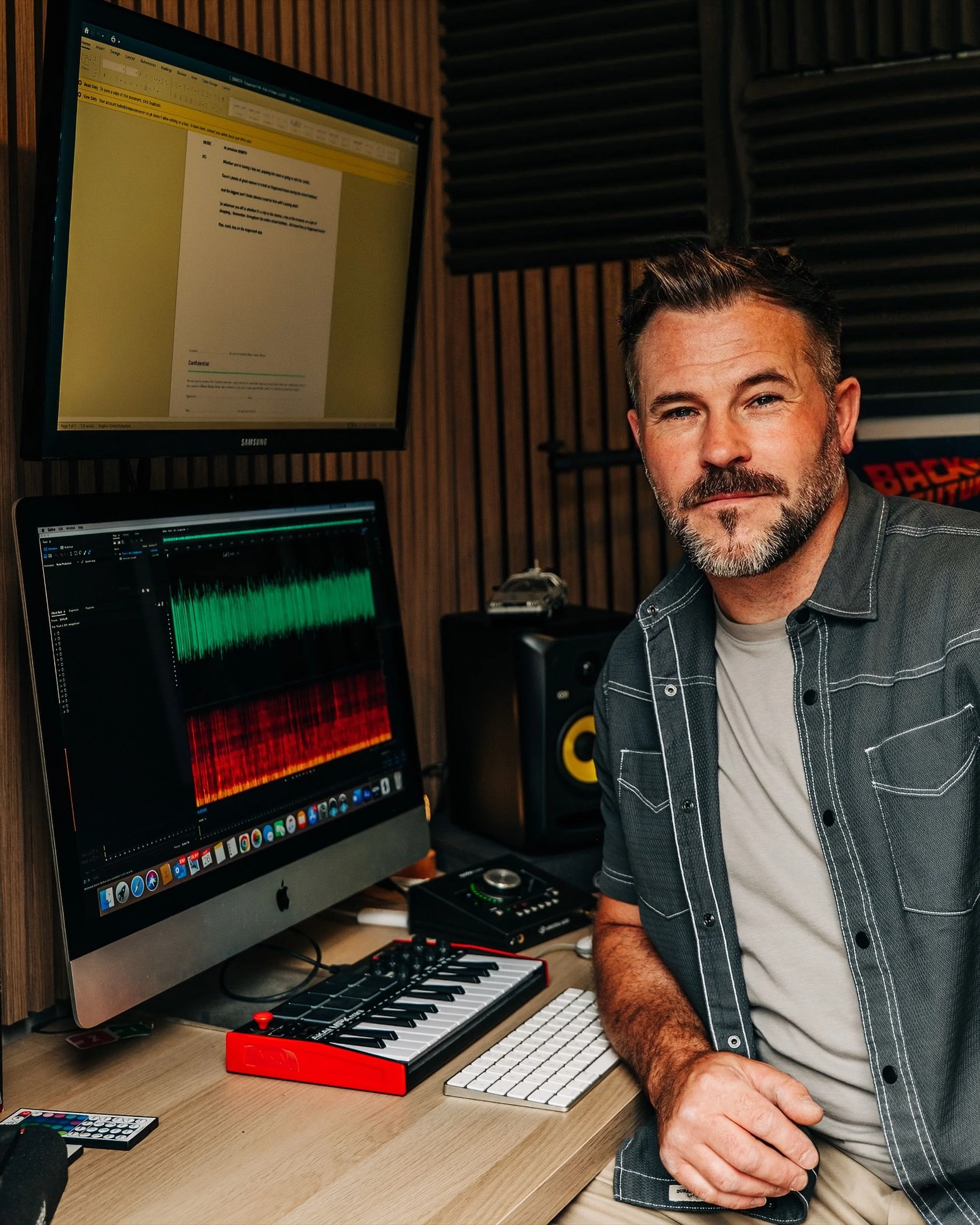
Share the script, your character notes, and any reference audio you have. I’ll come back with something close to what you’re looking for on the first pass, which saves time on both sides. Directed sessions via Source Connect, Cleanfeed or Zoom let you shape takes in real time if you want that level of involvement. Self-directed sessions work just as well if you’d rather send a brief and receive finished audio back. Either way, revisions are available once the audio sits against your sound design, because a line can land differently in context than it does on its own.
Fees are project-based rather than a flat rate, so you’re paying for what you’re actually making. Script length, the number of character roles, and usage rights all factor into the quote. Get in touch with the details and I’ll come back to you the same day.
How the Process Works
Request a Demo Read
The quickest way to know whether the voice fits your game is to hear it on your own script. Send over a few lines and I’ll record a demo read. Turnaround is the same day, and most people find that’s enough to decide.
If the casting isn’t locked yet and you’re still working out what the characters need, a quick call is the easiest place to start. Get in touch via the contact form below, email hello@timleevoiceover.co.uk, or book a call at a time that suits. You’ll hear back the same day.
Send the script. I’ll make the character sound like someone worth listening to.